Manga Preservation Storage Methods That Actually Protect Your Collection

Manga preservation storage methods are essential for anyone who wants to keep their favorite volumes in pristine condition for years to come. Whether you own a modest shelf of series or a room-filling library, the way you store your books directly affects their longevity, value, and appearance. Paper is a fragile material, and manga volumes are especially vulnerable to environmental factors like heat, moisture, and light. Understanding the basics of proper storage can save you from the heartbreak of yellowed pages, warped covers, or worse, mold damage.
Why Proper Storage Matters for Manga Collectors?
Manga volumes are typically printed on paper that contains impurities and acids that naturally break down over time. According to preservation experts, this means comics and manga are essentially on a slow path of self-destruction from the moment they are produced. The good news is that correct storage can significantly slow this process. Many collectors invest hundreds or even thousands of dollars into their collections, so protecting that investment should be a priority. Beyond financial value, there is also sentimental worth. A well-preserved manga collection tells a story not just through its pages, but through its physical condition.
Temperature and humidity are the two biggest threats to paper-based collections. Fluctuations in either can cause pages to expand, contract, warp, or grow mold. Forum discussions among manga collectors frequently highlight how quickly humidity above 65% can lead to musty odors and foxing, which are brown or yellow spots caused by fungi or metal contamination. These issues are often irreversible, making prevention far more effective than any attempted cure.
Controlling Temperature and Humidity
Temperature and humidity are the two biggest threats to paper-based collections. Fluctuations in either can cause pages to expand, contract, warp, or grow mold. Forum discussions among manga collectors frequently highlight how quickly humidity above 65% can lead to musty odors and foxing, which are brown or yellow spots caused by fungi or metal contamination. These issues are often irreversible, making prevention far more effective than any attempted cure.
1. Finding the Right Climate
The environment where you store your manga matters more than the containers you use. According to Anime News Network, humidity levels below 40% will make paper brittle over time, while levels above 65% encourage mold growth and attract pests like silverfish. The sweet spot for relative humidity falls between 40% and 50%, which keeps paper flexible without inviting moisture-related problems. Temperature is equally important. Most archives maintain collections around 68 degrees Fahrenheit because cooler temperatures slow down the chemical reactions that cause paper to degrade. For home collectors, a consistent range of 68 to 74 degrees Fahrenheit is perfectly acceptable.
Stability is key. Rapid fluctuations in temperature or humidity stress paper fibers and can cause warping, splitting, or delamination. This is why attics, basements, and garages are terrible choices for manga storage. These areas experience the greatest swings in climate and often lack proper air circulation. Instead, choose an interior wall away from windows, pipes, or external walls that might collect condensation.
2. Monitoring Your Storage Space
You cannot manage what you do not measure. A simple thermohygrometer, which measures both temperature and relative humidity, is an inexpensive but invaluable tool for any collector. Place it near your shelves and check it regularly. If you live in a humid climate, a dehumidifier may be necessary to maintain safe levels. In very dry climates, a humidifier can prevent paper from becoming brittle. The goal is consistency. Even if you cannot hit the ideal numbers, a stable environment that does not fluctuate wildly will still protect your collection better than an unstable one.
Choosing the Right Storage Containers
Many manga collectors wonder whether they should bag their volumes. The short answer is that bagging protects against dust, shelf wear, and scuffs, but it does not stop yellowing. All paper yellows over time because of oxidation, and no bag can prevent that entirely. However, polypropylene plastic bags that are acid-free are well-suited for long-term storage and offer a barrier against light and environmental shifts. If you choose to bag your manga, leave the sleeve open to allow airflow. Sealing a book completely can trap moisture and lead to mold.
1. Bags, Boards, and Sleeves
Many manga collectors wonder whether they should bag their volumes. The short answer is that bagging protects against dust, shelf wear, and scuffs, but it does not stop yellowing. All paper yellows over time because of oxidation, and no bag can prevent that entirely. However, polypropylene plastic bags that are acid-free are well-suited for long-term storage and offer a barrier against light and environmental shifts. If you choose to bag your manga, leave the sleeve open to allow airflow. Sealing a book completely can trap moisture and lead to mold.
Backing boards, commonly used in comic book collecting, can also help manga volumes maintain their shape when stored upright. These boards should be acid-free and archival quality to avoid introducing new sources of degradation. Some collectors skip bags entirely and simply keep their shelves dusted and their rooms climate-controlled, which is also a valid approach.
2. Boxes and Shelving
For collectors with limited shelf space or those preparing for a move, acid-free cardboard boxes are a popular choice. These boxes should be buffered to prevent acids from developing and migrating to your books. Smaller boxes that hold 20 to 50 volumes are preferable to large ones because they are easier to move and less likely to cause crushing damage. Plastic containers with airtight seals offer even more protection against water and pests, though they should still be stored in a climate-controlled area.
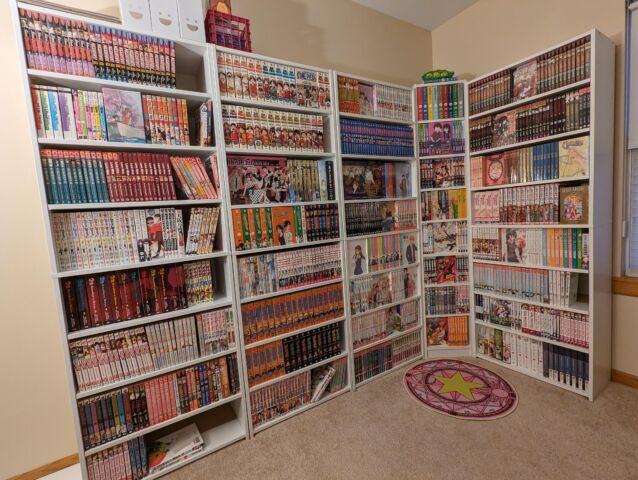
When it comes to shelving, metal or sealed wood are the best materials. Unsealed wood releases acidic vapors that can accelerate paper deterioration. If you love the look of natural wood, apply a sealant like linseed oil or a water-based urethane topcoat before placing books on the shelves. Adjustable shelves might seem convenient, but fixed shelves are sturdier and better support the weight of a full manga collection.
Protecting Manga From Light and Handling
Light, especially ultraviolet light, is one of the fastest ways to fade covers and damage paper. Direct sunlight should be avoided at all costs. Even indirect light from windows can cause gradual fading over time. If your manga shelf must be near a window, consider using UV-protective film on the glass or storing your most valuable volumes in opaque boxes. LED lighting is generally safer than fluorescent or incandescent bulbs, but keeping lights off when you are not in the room is still the best practice.
1. The Danger of Sunlight and UV Exposure
Light, especially ultraviolet light, is one of the fastest ways to fade covers and damage paper. Direct sunlight should be avoided at all costs. Even indirect light from windows can cause gradual fading over time. If your manga shelf must be near a window, consider using UV-protective film on the glass or storing your most valuable volumes in opaque boxes. LED lighting is generally safer than fluorescent or incandescent bulbs, but keeping lights off when you are not in the room is still the best practice.
2. Handling Your Collection With Care
Most damage to books happens during handling. Before touching your manga, wash your hands thoroughly to remove oils that can stain paper and attract dust. Some collectors use nitrile gloves or finger cots for extra protection, though clean bare hands are sufficient for most casual reading. Always set up a clean, dry, flat surface before sorting or cleaning your collection. Keep drinks, pens, and anything that might spill far away from your work area.
If a volume has a small tear, repair it with archival acid-free tape. Never use regular Scotch tape or masking tape, as the adhesives will yellow, stain, and eventually damage the paper beyond repair. For significant damage, consult a professional conservator rather than attempting a DIY fix.
Manga Storage Methods Comparison
Choosing the right storage method depends on your budget, space, and how you interact with your collection. Some collectors prefer to display their manga proudly on shelves, while others prioritize maximum protection by boxing everything away. Each approach comes with its own trade-offs between accessibility, cost, and long-term preservation. The table below breaks down the most common storage strategies so you can decide what works best for your situation.
| Aspect | Shelf Display | Bagged and Boxed | Digital Backup |
|---|---|---|---|
| Visibility | High, decorative | Low, hidden away | None, screen only |
| Protection from dust | Moderate, requires cleaning | High, enclosed | N/A |
| Protection from light | Depends on room placement | High if opaque | N/A |
| Climate control needed | Yes | Yes | No |
| Cost | Low to moderate | Moderate | Low |
| Best for | Active readers, casual collectors | Long-term preservation, valuable editions | Space-saving, travel |
| Risk of mold if humid | Moderate | High if sealed improperly | None |
Step-by-Step Guide to Storing Your Manga
Storing your manga properly does not have to be complicated or expensive. The key is to follow a consistent process that addresses climate, cleanliness, and organization from the start. A little preparation goes a long way toward preventing the kinds of damage that are costly or impossible to reverse. The steps below will help you set up a storage system that protects your collection and makes it easy to enjoy.
- Assess your space. Choose an interior wall away from windows, external walls, and sources of moisture. Avoid attics, basements, and garages.
- Measure the climate. Use a thermohygrometer to check temperature and humidity. Aim for 68 to 74 degrees Fahrenheit and 40% to 50% relative humidity.
- Clean your collection. Gently dust the spines and page edges with a soft brush. Remove any dirt or oils before storage.
- Choose your containers. Decide between open shelving, acid-free boxes, or polypropylene bags with backing boards based on your space and budget.
- Store upright. Keep manga volumes vertical like books on a library shelf. Do not stack them flat, as this can warp covers and pages.
- Allow airflow. If using bags, leave them open. If using boxes, do not overpack them. Books should slide in and out comfortably.
- Monitor regularly. Check your thermohygrometer monthly. Inspect volumes periodically for signs of yellowing, foxing, or pests.
Frequently Asked Questions (FAQs)
Even the most careful collectors have questions about protecting their manga. Storage conditions vary by climate and home layout, so what works for one person might not work for another. The answers below address the most common concerns based on real experiences from collectors and preservation guidelines. These should help you troubleshoot problems and refine your approach.
1. How do I stop my manga from yellowing?
You cannot stop yellowing completely because oxidation is a natural process for paper. However, you can slow it down by storing your manga in a cool, dark, dry place with stable humidity. Avoid direct sunlight and high temperatures, which accelerate chemical breakdown.
2. Is it bad to store manga in plastic bags?
Plastic bags are not inherently bad, but they must be used correctly. Polypropylene bags that are acid-free are safe for long-term storage. The danger comes from sealing bags completely in a humid environment, which traps moisture and encourages mold. Always leave bags open or use breathable materials.
3. What humidity level is too high for manga?
Relative humidity above 65% is considered dangerous for paper collections. At this level, mold can grow and pests like silverfish become active. Even if you do not see mold, a musty smell is a warning sign that your environment is too damp.
4. Can I store manga in a basement or attic?
No. Basements and attics experience the most extreme fluctuations in temperature and humidity, making them the worst places for paper preservation. Condensation, mold, and pests are common problems in these spaces.
Conclusion
Manga preservation storage methods are not about achieving museum-perfect conditions in your living room. They are about making smart, consistent choices that protect your collection from the most common threats. A stable climate, proper shelving, careful handling, and regular monitoring will keep your volumes readable and beautiful for years. Whether you are a casual reader or a dedicated collector, the effort you put into storage today will determine the condition of your collection tomorrow. Take the time to set things up right, and your manga will thank you with pages that stay crisp, covers that stay vibrant, and stories that remain as captivating as the day you bought them.