The Best Psychological Thriller Manga That Will Keep You Guessing

The best psychological thriller manga delivers mind games, moral dilemmas, and characters who blur the line between hero and villain. These stories pull you into twisted narratives where every page turn reveals new layers of deception. According to Wikipedia, the psychological thriller genre in manga focuses on the unstable mental states of characters and explores complex emotional themes through suspenseful storytelling.
Why Psychological Thriller Manga Stands Out?
Psychological thriller manga offers a unique reading experience that differs from traditional action or horror genres. These series prioritize mental battles over physical confrontations. Readers become invested in intricate plots where intelligence and manipulation drive the conflict forward.
The genre gained significant popularity in the late 1990s and early 2000s. Series like Monster and Death Note established benchmarks that newer titles still try to match. According to Anime News Network, these works introduced Western audiences to sophisticated storytelling techniques rarely seen in mainstream comics.
Essential Psychological Thriller Manga You Must Read
The best psychological thriller manga challenges your perception of reality while delivering intricate narratives that reward careful attention. These series explore the darkest corners of human psychology through mind games, moral dilemmas, and characters who blur the line between hero and villain. According to Wikipedia, the psychological thriller genre in manga focuses on unstable mental states and explores complex emotional themes through suspenseful storytelling. The following ten titles represent the pinnacle of this genre, each offering unique approaches to psychological tension and intellectual engagement.
1. Monster by Naoki Urasawa
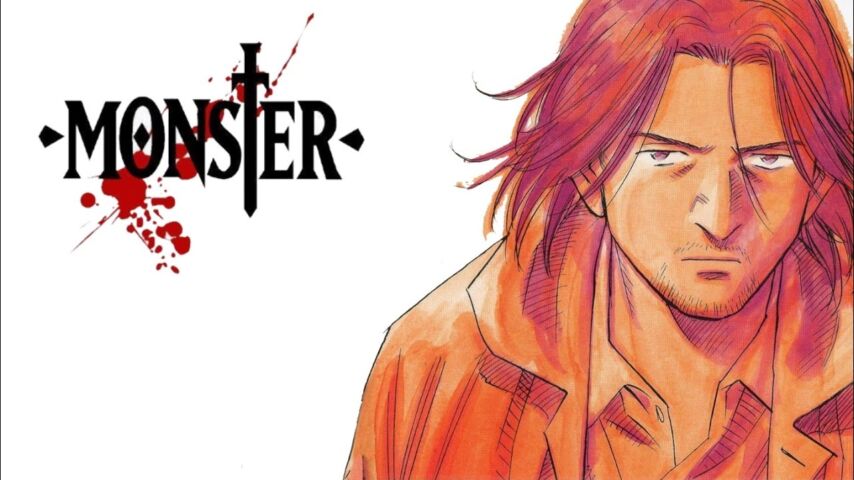
Monster stands as the definitive psychological thriller manga according to multiple authoritative sources. Published between 1994 and 2001, this 18-volume series follows Dr. Kenzo Tenma, a Japanese neurosurgeon working in Germany. After saving the life of a young boy named Johan Liebert, Tenma discovers his patient has grown into a sociopathic serial killer. The story explores profound questions about morality, justice, and the nature of evil. Johan Liebert ranks among the most chilling antagonists in manga history due to his quiet, calculated menace rather than physical violence. The series won the prestigious Shogakukan Manga Award and has sold over 20 million copies worldwide.
2. Death Note by Tsugumi Ohba and Takeshi Obata
Death Note represents another pillar of the psychological thriller genre. The series follows Light Yagami, a brilliant high school student who discovers a supernatural notebook that kills anyone whose name is written inside it. What begins as a quest to eliminate criminals evolves into a complex cat-and-mouse game between Light and the mysterious detective known only as L. The intellectual duel between these two characters drives the narrative forward. According to forum discussions, the battle of wits showcased in Death Note set a new standard for psychological confrontations in manga. The series examines how absolute power corrupts absolutely, transforming an idealistic student into a megalomaniac who believes himself divine.
3. 20th Century Boys by Naoki Urasawa
20th Century Boys demonstrates Urasawa’s mastery of complex plotting across 22 volumes. The story follows Kenji Endo, a middle-aged convenience store worker who discovers that a mysterious cult leader named “Friend” is using a symbol from his childhood to orchestrate terrorist attacks. The narrative spans from 1969 to 2018, utilizing flashbacks and time skips to weave an intricate conspiracy thriller. According to Wikipedia, the series won multiple awards including the Kodansha Manga Award and the Shogakukan Manga Award, with 36 million copies in circulation. The manga explores how childhood dreams and traumas shape adult destinies while maintaining suspense about Friend’s true identity until the final chapters.
4. Homunculus by Hideo Yamamoto
Homunculus delivers psychological intensity through a unique supernatural premise. Serialized from 2003 to 2011 in 15 volumes, the story follows Susumu Nakoshi, a homeless man who undergoes trepanation and gains the ability to see people’s inner psyches manifested as grotesque “homunculi”. According to Wikipedia, the series falls under psychological horror and psychological thriller genres, exploring themes of perception, trauma, and the nature of reality. The manga presents a disturbing journey into consciousness as Nakoshi navigates a world where physical appearance reflects psychological distortion. The series was adapted into a live-action film directed by Takashi Shimizu in 2021.
5. Liar Game by Shinobu Kaitani
Liar Game combines gambling mechanics with psychological warfare across 19 volumes. Serialized from 2005 to 2015, the series follows Nao Kanzaki, an honest college student forced to participate in a tournament where contestants must deceive each other to win massive cash prizes. According to Wikipedia, the series is classified as both gambling and psychological thriller genres. The games require mathematical precision, game theory knowledge, and psychological manipulation rather than luck. The protagonist teams up with Shinichi Akiyama, a con artist and former psychology student, to navigate increasingly complex rounds. The manga explores trust, human nature, and whether honesty can survive in a world designed to reward deception.
6. The Promised Neverland by Kaiu Shirai and Posuka Demizu
The Promised Neverland delivers psychological thrills through a dystopian premise. The story follows Emma, Norman, and Ray, orphans who discover their loving orphanage is actually a farm raising children as food for demons. According to one analysis, the manga’s fast-paced mind games and strategic cat-and-mouse tension distinguish it from slower-paced thrillers. The series ran from 2016 to 2020 in 20 volumes, combining psychological strategy with horror elements. The protagonists must outwit their “Mother” caretaker while planning an escape with dozens of younger children. The artwork contrasts whimsical character designs with haunting dystopian landscapes, enhancing the psychological dissonance.
7. Tomodachi Game by Mikoto Yamaguchi and Yuki Sato
Tomodachi Game tests the limits of friendship through psychological warfare. Serialized from 2013 to 2024 in 26 volumes, the series follows Yuichi Katagiri and his friends who are forced to participate in a mysterious game designed to test trust and loyalty. According to Wikipedia, the series is classified specifically as a psychological thriller. The game orchestrator, represented by a creepy mascot named Manabu, forces participants to betray each other to eliminate debts. Yuichi initially appears as a friendly student but reveals a calculating, manipulative personality as the games progress. The series explores how pressure and financial desperation destroy relationships, with each round revealing darker secrets about the participants.
8. Billy Bat by Naoki Urasawa and Takashi Nagasaki
Billy Bat represents Urasawa’s ambitious foray into historical conspiracy thrillers. Serialized from 2008 to 2016 in 20 volumes, the story follows Kevin Yamagata, a Japanese American comic artist in 1949 who discovers his popular character “Billy Bat” may have been unconsciously plagiarized from an ancient symbol. According to Wikipedia, the series combines mystery and science fiction elements while spanning multiple millennia. The narrative weaves through post-war Japan, the Kennedy assassination, and biblical times, suggesting the Billy Bat symbol has guided human history. The manga won the 2012 Lucca Comics Award for Best Series and the 2014 Max & Moritz Prize for Best International Comic. It explores themes of prophecy, historical manipulation, and the power of symbols.
9. Kaiji by Nobuyuki Fukumoto
Kaiji delivers psychological tension through high-stakes gambling scenarios. First serialized in 1996 and continuing through multiple arcs, the series follows Kaiji Ito, a down-on-his-luck man forced into underground gambling to clear massive debts. According to Wikipedia, the series explores human psychology in extreme situations, with characters navigating betrayal and elaborate cons while desperately seeking victory. Fukumoto’s distinctive art style uses exaggerated facial expressions to convey intense psychological states. The gambling games, including “Restricted Rock Paper Scissors” and “E-Card,” require reading opponents’ tells while managing one’s own psychological tells. The series examines desperation, pride, and the human capacity for both cruelty and redemption under extreme pressure.
10. Goodnight Punpun by Inio Asano
Goodnight Punpun delivers psychological intensity through surreal realism. This series uses anthropomorphic characters and dreamlike imagery to explore depression, trauma, and existential dread. The story follows Punpun Punyama through adolescence and early adulthood as he navigates family dysfunction, unrequited love, and mental illness. Unlike traditional thrillers, Goodnight Punpun generates tension through emotional authenticity rather than plot twists. The protagonist’s gradual psychological deterioration feels uncomfortably real. According to reader recommendations, this manga leaves lasting impressions due to its unflinching portrayal of human suffering. The artwork shifts between realistic backgrounds and simple bird-like depictions of characters, enhancing the surreal quality of Punpun’s deteriorating mental state.
Comparing Classic and Modern Psychological Thrillers
The psychological thriller manga landscape has evolved significantly over the past three decades. Classic series established storytelling foundations while modern titles experiment with format and presentation.
| Aspect | Classic Era (1994-2006) | Modern Era (2010-Present) |
|---|---|---|
| Pacing | Slow burn, methodical | Faster, binge-friendly |
| Art Style | Detailed, realistic | Varied, often stylized |
| Themes | Moral philosophy, identity | Social commentary, trauma |
| Length | 10+ volumes common | Shorter, concise series |
| Notable Examples | Monster, Death Note | The Promised Neverland, Tomodachi Game |
Classic series like Monster and 20th Century Boys prioritize long-form character development. These stories unfold across dozens of chapters, allowing complex plot threads to develop naturally. The investment pays off through deeply satisfying conclusions that reward attentive reading.
Modern psychological thrillers often adapt to digital reading habits. Series like The Promised Neverland deliver intense pacing designed to keep readers clicking to the next chapter. According to forum discussions, this approach sacrifices some philosophical depth for immediate engagement.
How to Choose Your Next Psychological Thriller?
Selecting the right psychological thriller manga depends on your preferences for tone, pacing, and content intensity. Consider these factors before starting a new series.
- Assess your tolerance for dark themes. Some series explore graphic violence, abuse, or mental illness in explicit detail. Monster contains disturbing content but frames it within serious philosophical inquiry. Other titles may use shock value more gratuitously.
- Determine your preferred pacing. Do you enjoy slow-burn mysteries that unfold over hundreds of chapters? Monster and 20th Century Boys suit this preference. If you prefer faster resolutions, consider shorter series like Homunculus or Liar Game.
- Consider the artistic style. Realistic artwork enhances the grounded feeling of series like Monster. Stylized or surreal art, as seen in Goodnight Punpun, creates psychological distance that some readers find effective while others find distracting.
- Check content warnings. The best psychological thriller manga often addresses traumatic subjects. Research potential triggers before reading, particularly for series involving serial killers, psychological abuse, or graphic violence.
- Sample before committing. Read the first chapter or volume before purchasing entire series. Psychological thrillers rely heavily on personal taste, and what resonates with critics may not connect with every reader.
Frequently Asked Questions (FAQs)
Many readers have questions about the best psychological thriller manga before starting their journey into this intense genre. Understanding the differences between subgenres, entry points, and content warnings helps ensure you select titles that match your preferences and comfort level. The following answers address common concerns based on reader discussions and critical analysis of these complex works.
1. What makes psychological thriller manga different from horror manga?
Psychological thrillers focus on mental and emotional tension rather than supernatural scares or gore. While horror manga aims to frighten through external threats, psychological thrillers generate anxiety through character psychology, moral ambiguity, and intellectual puzzles. According to genre classifications, Monster represents psychological thriller while Uzumaki by Junji Ito exemplifies horror manga.
2. Is Monster worth reading if I have seen the anime?
Absolutely. The manga provides additional character details and subplots that the anime adaptation condensed or removed. Naoki Urasawa’s original artwork conveys emotional nuance that animation sometimes struggles to capture. The manga also allows readers to control pacing, spending more time with complex passages.
3. Which psychological thriller manga works best for beginners?
Death Note serves as an accessible entry point due to its compelling hook and relatively straightforward narrative. The series balances intellectual depth with entertainment value, making it less demanding than longer works like Monster. Once comfortable with the genre, readers can explore more challenging titles.
4. Are there completed psychological thriller manga series?
Yes, many acclaimed series have concluded. Monster, Death Note, 20th Century Boys, and Liar Game all offer complete stories with satisfying endings. This completion ensures readers can experience full narratives without waiting for ongoing publications.
5. How do psychological thriller manga handle mental health representation?
Quality varies significantly across titles. Series like Monster treat psychological trauma with seriousness and research, depicting PTSD and dissociative disorders respectfully. Others may use mental illness primarily as plot devices or for shock value. Research specific titles if accurate mental health representation matters to you.
Conclusion
The best psychological thriller manga challenges readers intellectually and emotionally while delivering page-turning suspense. These series prove that comics can explore complex philosophical questions while remaining thoroughly entertaining. Whether you prefer the methodical tension of Monster, the intellectual battles of Death Note, or the emotional devastation of Goodnight Punpun, the genre offers something for every sophisticated reader.
Start your journey into psychological thriller manga with confidence. These stories reward attention to detail and often improve upon rereading as you catch subtle foreshadowing and character development. The best psychological thriller manga stays with you long after you turn the final page, leaving you questioning your own moral boundaries and psychological resilience.